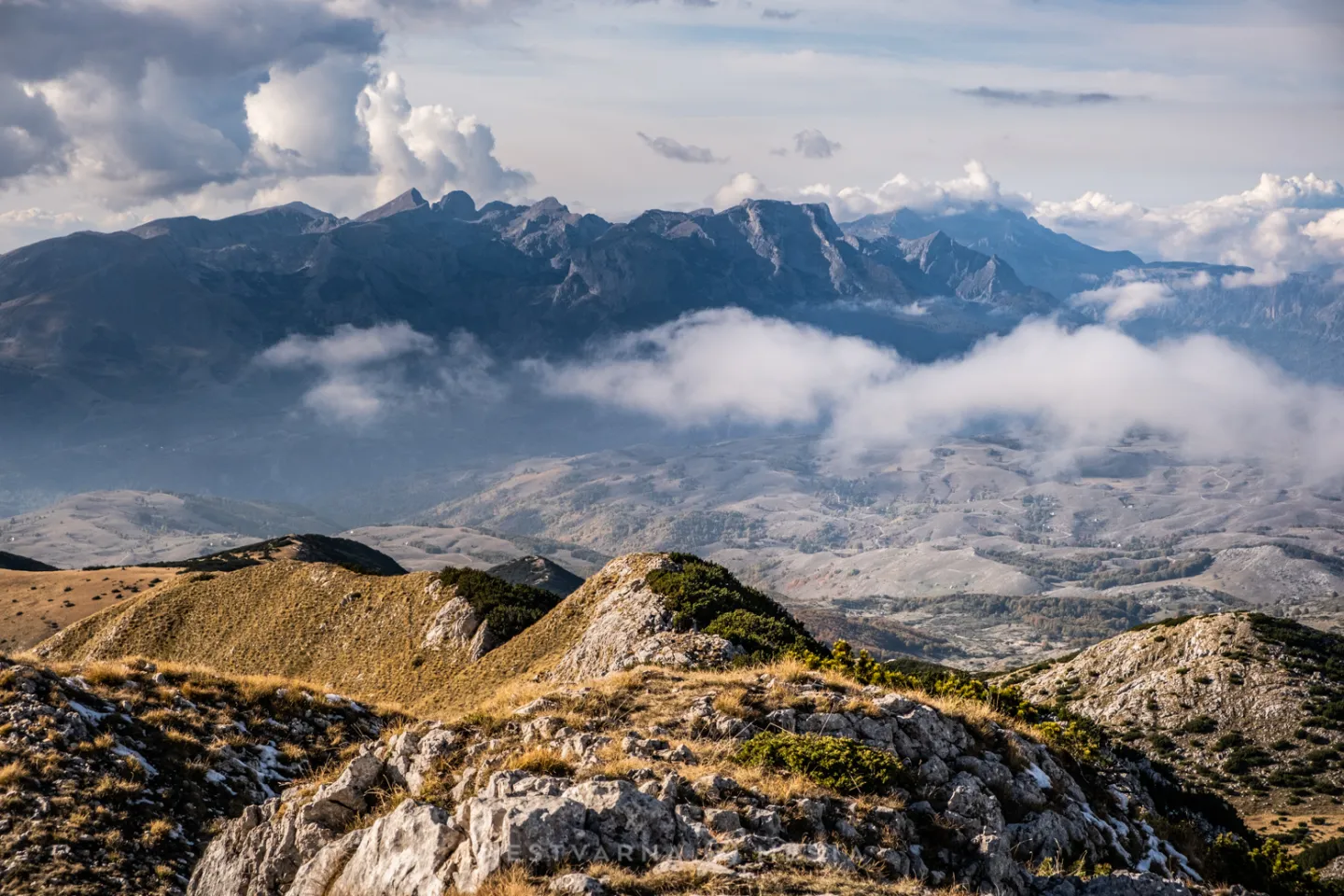
Planning your first outdoor trip to the Balkans? What you actually need to know — currencies, seasons, roads, safety and why a local guide makes all the difference.

The Balkans keep appearing on "best destinations" lists, and for good reason. Seven countries, dramatically different landscapes, and a fraction of the crowds you'd find in Western Europe. For outdoor travelers — hikers, climbers, cyclists, anyone who moves through places rather than just visiting them — this part of Europe offers something genuinely rare.
But the Balkans are not Western Europe, and treating them like they are is the fastest way to have a frustrating trip. Here's what actually matters before you go.
This sounds obvious, but it catches people off guard. Serbia, Montenegro, Bosnia & Herzegovina, Albania, North Macedonia, Croatia, and Slovenia each have their own currency, their own border crossing requirements, their own road infrastructure, and their own travel rhythm.
Moving between countries takes more planning than crossing from Germany into Austria. Border crossings can be slow, especially in summer. Some crossings are not open around the clock. Factor this into your itinerary — a four-country trip in five days is almost always a mistake.
With the exception of Croatia and Slovenia (which use the Euro), each country in the Balkans has its own currency. Serbia uses the Dinar, Montenegro the Euro, Bosnia the Convertible Mark, Albania the Lek, North Macedonia the Denar.
Card payments are increasingly accepted in cities, but once you leave urban areas — and if you're coming for the outdoor experiences, you will leave urban areas — cash becomes essential. Mountain huts, local guides, national park entry fees, village guesthouses: most of these are cash only.
BOROVA FIELD NOTE Treat cash as part of your trail kit. Withdraw enough for mountain huts, park fees, village stays and small stops before leaving the last larger town. It is a small preparation that prevents payment logistics from reshaping an otherwise well-planned day.
Withdraw local currency at ATMs in the first city you arrive in. Exchange rates at airports are poor. Exchange offices in town centres are generally reliable.
The Balkans have real seasons, and the difference between visiting in May and August is significant — especially for hikers and outdoor travelers.
Spring (May–June): The best window for most outdoor activities. Trails are clear, rivers are full for rafting, temperatures are ideal, and the crowds haven't arrived. Wildflowers on the high plateaus of Durmitor and the Albanian Alps. Highly recommended.
Summer (July–August): Hot at lower elevations. Canyon routes and via ferrata on south-facing limestone can be uncomfortably warm. Coastal areas (Kotor, Dubrovnik) are extremely crowded. High mountain routes above 1,500m are excellent. If you're going in August, plan to be at altitude.
Autumn (September–October): Arguably the finest season. Cooler temperatures, autumn colours, emptier trails, accommodation easier to find. The Neretva valley and Sarajevo hills are spectacular in October.
Winter: Durmitor and certain Alpine routes in Montenegro and Albania offer ski touring and winter mountaineering for experienced visitors. Not a season for casual travel in most of the region.
If you're planning to cover serious ground, renting a car is the most practical option. Public transport between major cities exists but is slow and infrequent between smaller towns.
A few things to know about driving in the Balkans:
Road quality varies enormously. Main highways are generally fine. Mountain roads can be narrow, unsealed, and dramatically steep — especially in Montenegro and Albania. Don't underestimate driving times on mountain routes. What looks like 40km on a map can take 90 minutes.
Albania in particular: roads have improved significantly in recent years but are still challenging in rural areas. GPS works, but local knowledge beats it.
Petrol stations are widely available in Serbia, Montenegro, and Bosnia. In remote parts of Albania and North Macedonia, fill up when you can.
The Balkans are safe for travelers. Violent crime targeting tourists is rare. The region has a strong hospitality culture — you are more likely to be invited for coffee than to experience any trouble.
Practical safety considerations for outdoor travelers:
Mountain weather changes fast. This is true across the region but especially relevant in Durmitor, Prokletije, and the higher ranges of Bosnia. A sunny morning does not guarantee a safe afternoon on exposed terrain. Check forecasts, carry layers, and don't dismiss early warning signs.
Via ferrata and technical routes: fixed equipment is not maintained to Alpine standards everywhere. Go with a licensed guide on any route you don't know.
Travel insurance: get it, and make sure it covers mountain rescue and evacuation. Helicopter rescue in remote terrain is expensive.
The Balkans don't require specialist gear, but a few items make a real difference:
The Balkans have exceptional local guides — people who have been hiking, climbing, and working in mountain rescue in their home regions for decades. The difference between going with a knowledgeable local and navigating alone is the difference between a good trip and an extraordinary one.
This isn't about safety only. A local guide knows which trail has the best views this time of year, which village does the best lamb, where the griffon vultures nest above Uvac, and which via ferrata route was just re-equipped. That knowledge takes years to accumulate and can't be found on any travel site.
If you're visiting the Balkans for outdoor experiences, booking at least one guided day is worth every euro.
The Balkans reward preparation. Not over-planning — leaving room for the unexpected is part of what makes the region work — but knowing enough to make good decisions on the ground.
Use our AI trip planner to describe what you're looking for. We'll suggest routes, connect you with local guides, and help you build an itinerary that actually fits how you travel.
Start planning your Balkan adventure →
Borova creates custom journeys across Serbia, Montenegro, Bosnia & Herzegovina, Croatia, Slovenia, Albania and North Macedonia.
FAQ
Everything you need to know before booking your Balkan adventure.
© 2026 Borova. All rights reserved.
.svg)